


Key Takeaways
- Start planning early and create a clear timeline for the transition process
- Break the downsizing process into smaller, manageable steps
- Update all legal documents and medical records with new address information
- Provide emotional support throughout the entire moving process
- Stay connected after the move to help with adjustment and relationship building
Watching a parent transition to assisted living can bring up a mix of emotions — relief that support is available, worry about logistics, and uncertainty about how they’ll adjust once they move. At the same time, you may find yourself juggling paperwork, family conversations, downsizing decisions, and the realities of helping your parent leave a familiar environment.
A clear checklist can make the move to assisted living feel much more manageable. Breaking the transition into smaller steps helps you stay organized, support your parent’s emotional needs, and ensure important details aren’t overlooked — from packing and healthcare coordination to legal documents and post-move routines.
How to Plan and Prepare for the Transition to Assisted Living
Start your research by visiting different assisted living communities and comparing their amenities, care levels, and social programs. Look for communities that match your parent’s interests and needs, whether they enjoy fitness classes, creative activities, or quiet spaces for reading.
Discuss financing options early in the process, including long-term care insurance, savings, and payment plans. Create a realistic timeline that gives your family 2-3 months to complete all necessary tasks without rushing through important decisions.
Help your parent understand what daily life looks like in their new community. Share information about meal options, activity schedules, and support services so they can visualize their new routine and feel more comfortable with the upcoming change.
How to Simplify Downsizing and Packing for Assisted Living
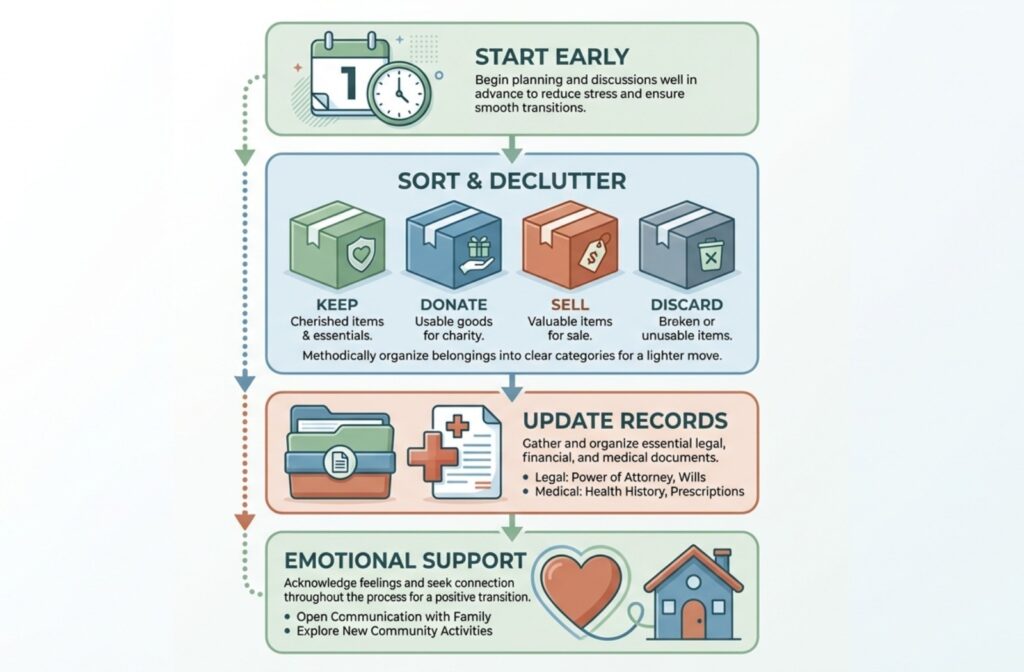
Break Down Tasks into Manageable Steps
Tackle one room at a time instead of trying to sort through the entire house at once. This approach prevents your parent from feeling overwhelmed and helps you stay organized throughout the process.
Create four clear categories for every item: keep, donate, discard, and sell. Label boxes or areas of the room so decisions feel concrete and progress stays visible. Take regular breaks to give your parent time to process emotions that come up during sorting.
Focus on Sentimental and Functional Items
Focus on items that can make the new space feel like home, such as favorite photos, comfortable furniture pieces, or cherished books. Consider the size limitations of the new living space when making decisions about larger items by reviewing available floorplans.
Take photos of meaningful items that won’t fit in the new home. These digital memories can provide comfort while keeping the physical space manageable and organized.
How to Begin Sorting Legal and Medical Records
Update Address Information
Gather all important documents that need address updates, starting with identification cards and driver’s licenses. Contact your parent’s insurance companies to update health, home, and auto policies with the new address and care arrangements.
Update banking information and arrange for automatic deposits to continue without interruption. Don’t forget to change addresses for Social Security, pension documents, and any subscription services your parent uses regularly.
Transfer Medical Care
Contact your parent’s current healthcare providers to transfer medical records and arrange for continuity of care. Some assisted living communities have relationships with local healthcare providers that can make this process smoother.
Transfer prescriptions to a pharmacy near the new community, and connect with the assisted living team to share current medication lists and dosing instructions.
How to Support the Emotional Adjustment
Begin conversations about the move several weeks or months before the transition date. This gives your parent time to process their feelings and ask questions about what to expect in their new home using effective communication strategies.
Listen carefully to concerns and validate feelings of sadness, anxiety, or excitement. Moving to assisted living represents a significant life change, and acknowledging these emotions helps your parent feel heard and supported.
Include siblings, grandchildren, and close friends in the conversation when possible. Having a strong support network makes the transition feel less isolating and more like a family decision made with love and care.
What Are Tips to Make Moving Day Easier?
Prepare for the Physical Move
Hire professional movers who have experience with senior transitions, or coordinate with family members who can help with heavy lifting and transportation. Pack a separate box with immediate necessities like medications, toiletries, and comfort items.
Label boxes clearly with both contents and destination rooms to make unpacking easier. Consider color-coding labels so helpers can quickly identify where items belong in the new space.
Set Up the New Living Space
Arrange furniture and personal items before your parent arrives, if possible. Having familiar belongings in place helps the new space feel welcoming from the very first moment.
Keep important documents and medications easily accessible during the first few days. Set up comfort items like favorite blankets, photos, and books in prominent places to create immediate feelings of home.
Harrison Bay Senior Living Makes Your Transition Smooth
Moving a parent to assisted living can be both emotional and logistically complex, but having a plan makes the process smoother for everyone. Preparing early, breaking tasks into manageable steps, updating legal and medical information, and supporting your parent’s emotional adjustment are key to ensuring they feel secure, respected, and involved.
At Harrison Bay Senior Living, families find a community designed to make that transition as smooth as possible. Residents benefit from private apartments, chef-prepared dining, daily activities, and secure gathering spaces that encourage routine and independence.
Located in Mound, MN, our community keeps families close while offering convenient access to healthcare providers and local amenities. With assisted living and memory care options available, residents can remain supported as needs change over time — without the stress of additional moves.
Schedule a tour today and discover how Harrison Bay Senior Living can make your parent’s next chapter feel welcoming, dignified, and supported.